Fuselage
Description
The fuselage of an airplane is the main body of the aircraft. It’s the part that holds everything together, including the cockpit where the pilots sit, the passenger cabin where people travel, and the cargo hold where luggage is stored. Think of it like the "frame" of the airplane. It’s designed to be strong and lightweight, so the plane can fly safely and efficiently. The fuselage also helps to keep the inside of the airplane comfortable and protected from the outside elements during the flight.
What is the fuselage made of?
In the past, the fuselage of airplanes was made of wood and fabric. But today, most modern airplanes are made of aluminum, which is strong and lightweight. Some newer planes are also made of composite materials like carbon fiber, which are even lighter and more durable than aluminum. These materials are used to build the fuselage because they can withstand the stresses of flight and help the plane to be more fuel-efficient.
Carbon fiber fuselage
Carbon Fiber Reinforced Polymer (CFRP)
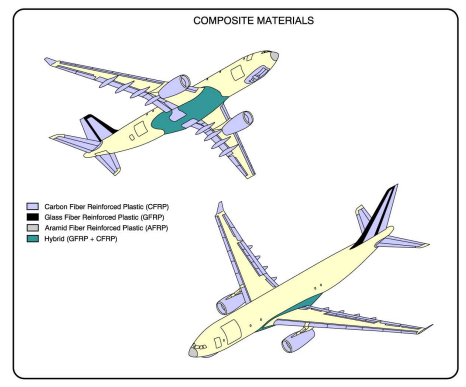
The Carbon Fiber used on the plane is called carbon fiber reinforced polymer (CFRP). It is a composite material, it has half the weight of aluminum but almost the same or better stiffness.1 The Airbus have been using CFRP for a long time. In Airbus A330, a plane published in 1992, parts of the plane have been made of CFRP.
Boeing's Choice
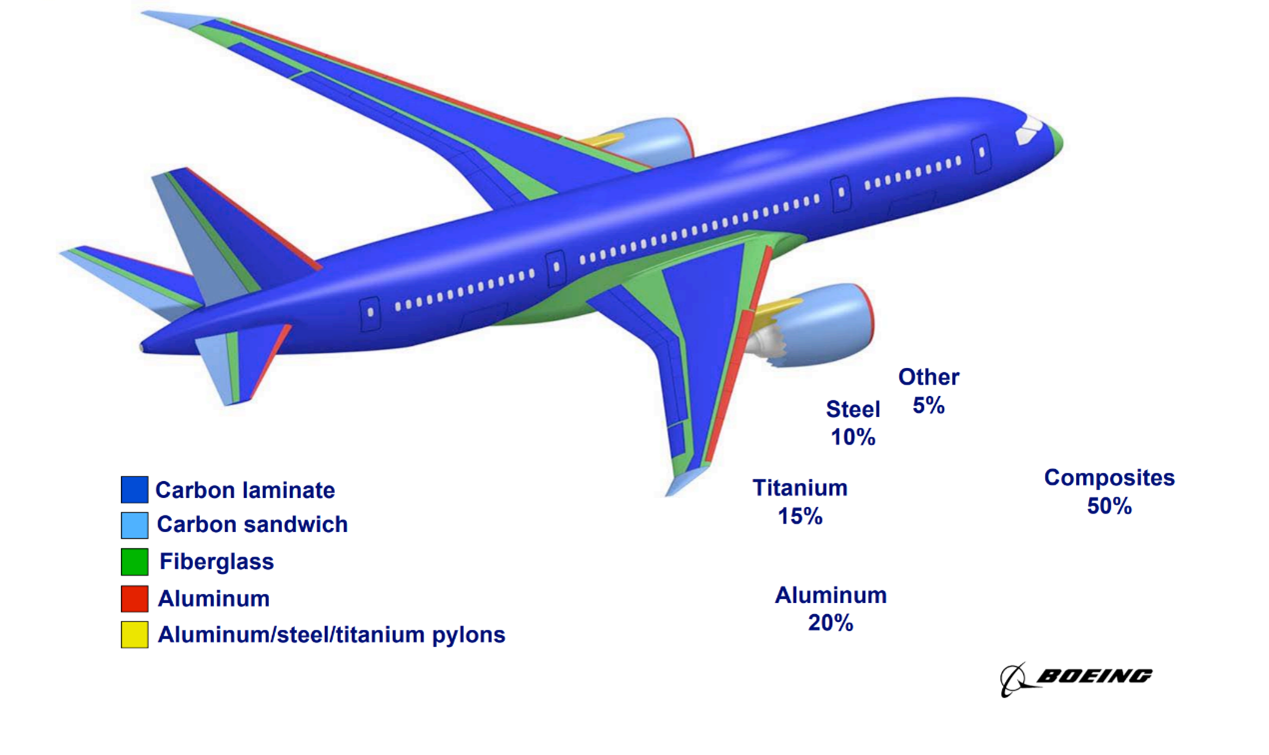
Boeing tried to use CFRP to compose the whole fuselage, Boeing joined forces with Toray to develop a giant machine that could reach its goals.The Boeing 787 Dreamliner is made up of approximately 50% composite materials by weight.
Similar Choice
Airbus took a similar approach with their latest plane, the A350. The A350 is made up of 53% composite materials by weight.
These materials not only reduce the weight of the aircraft but also improve its overall strength and resistance to corrosion, reducing long-term maintenance costs.
Safety Provement, the collision on the runway at Tokyo Haneda Airport
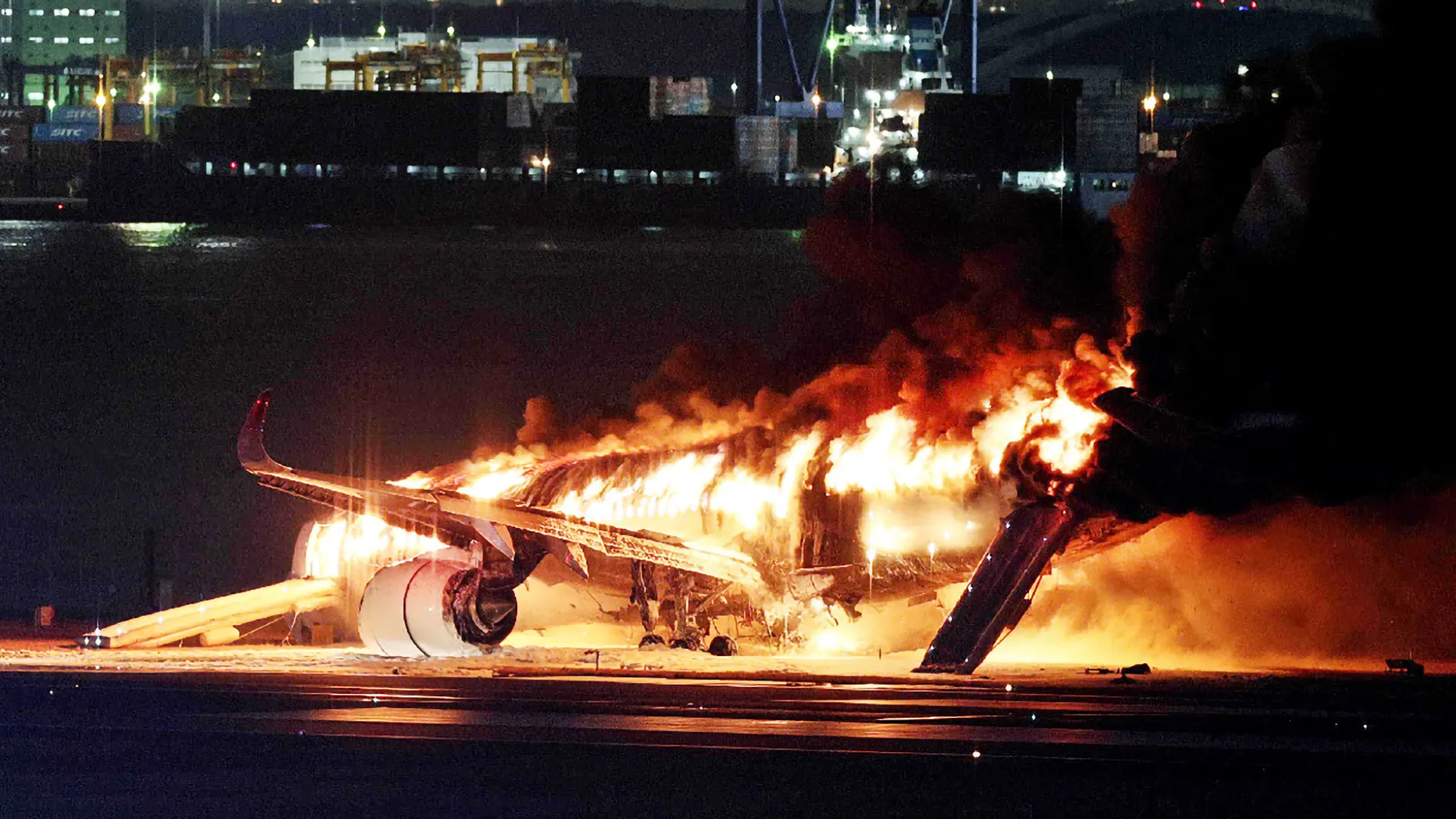
On 2 January 2024, a collision occurred on the runway at Tokyo Haneda Airport. A Japan Airlines Airbus A350 hit on a Japan Coast Guard DASH-8, which casued five of the six crew on board the Dash 8 died in the collision.4
Thanks to the usage of composite material, the time that the Airbus A350 was not on fire was prolonged as long as possible, making time for the safe evacuation of all on board.
Improvement on the efficiency
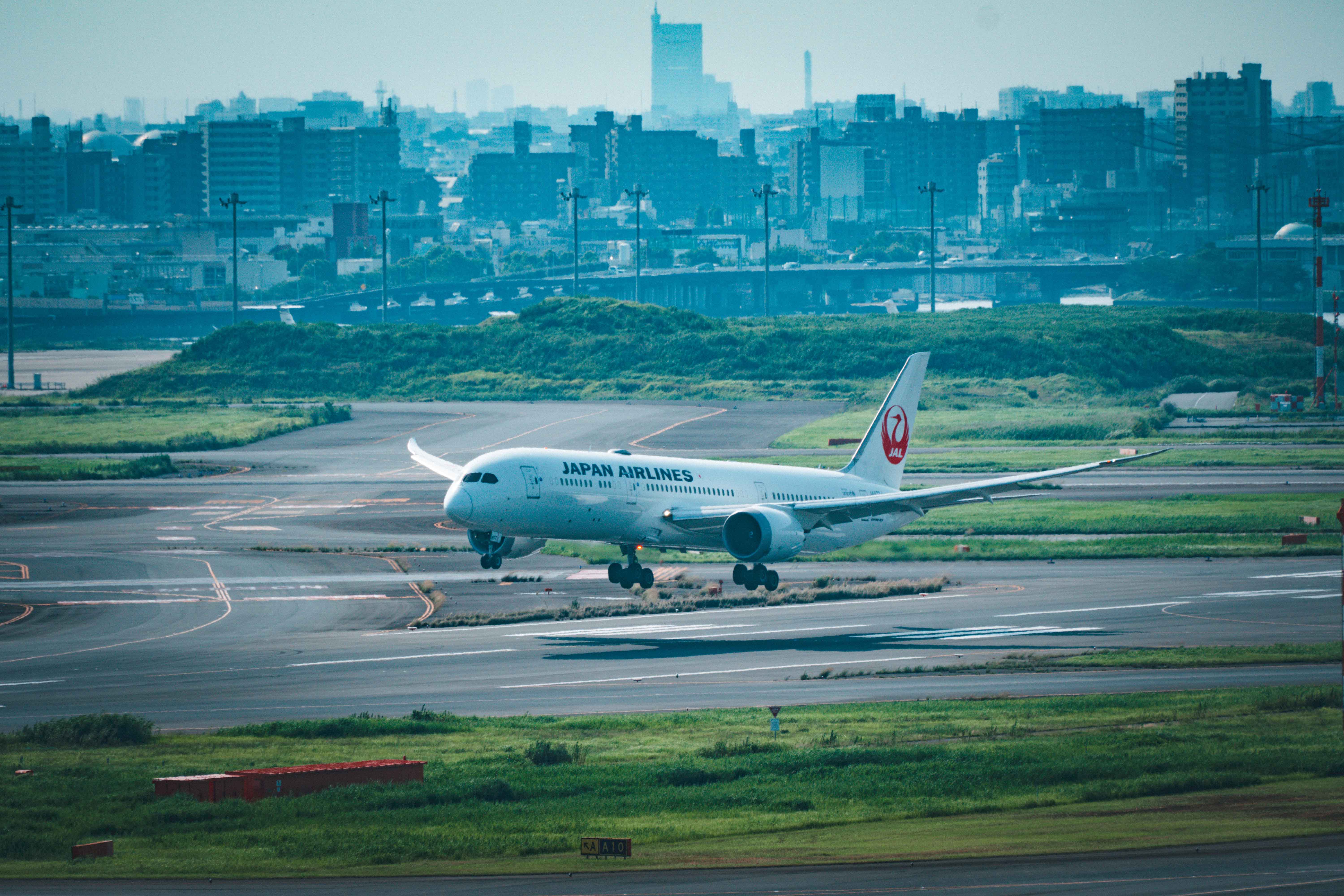
Because of the excellent elastic deformation properties of CFRP, the wings of Boeing will change at different speeds. The feature is called Aeroelastic tailoring, which also enhanced the fuel efficiency of the Boeing 787.
-
http://www.dexcraft.com/articles/carbon-fiber-composites/aluminium-vs-carbon-fiber-comparison-of-materials ↩
-
Image Source: https://www.aircraftinvestigation.info/airplanes/A330-300.html ↩
-
Image Source: https://web.archive.org/web/20070808001501/http://www.aiaa.org/events/aners/Presentations/ANERS-Hawk.pdf ↩
-
https://en.wikipedia.org/wiki/2024_Haneda_Airport_runway_collision ↩
-
Photo Credit: STR/JIJI PRESS/AFP via Getty Images ↩
-
Photo Credit: Haixing Zhu ↩